In a nutshell
Bologna is the capital of Emilia-Romagna, a region of about 4.5 million people in northern Italy; its metropolitan area has just over a million. For visitors it is a city of towers, red-brick streets and covered walkways. For anyone interested in science and education it is something more: the home of a university founded in the 11th century, the city that gave its name to the Bologna Process, and today one of Europe's centres for supercomputing and climate data.
This page covers the university, the Two Towers, the porticoes, the region and the DAMA technopole, and shows where Bologna sits on the TheScience.fm Atlas.
Higher education in Bologna: the university
The University of Bologna describes itself as the oldest university in the Western world. The year 1088 is conventionally taken as the founding of the Studium of Bologna, and the university speaks of nine centuries of the Alma Mater Studiorum.
The Bologna Process takes its name from this city, where ministers signed the Bologna Declaration in June 1999 – see The Process.
Sources: [1]
The Two Towers
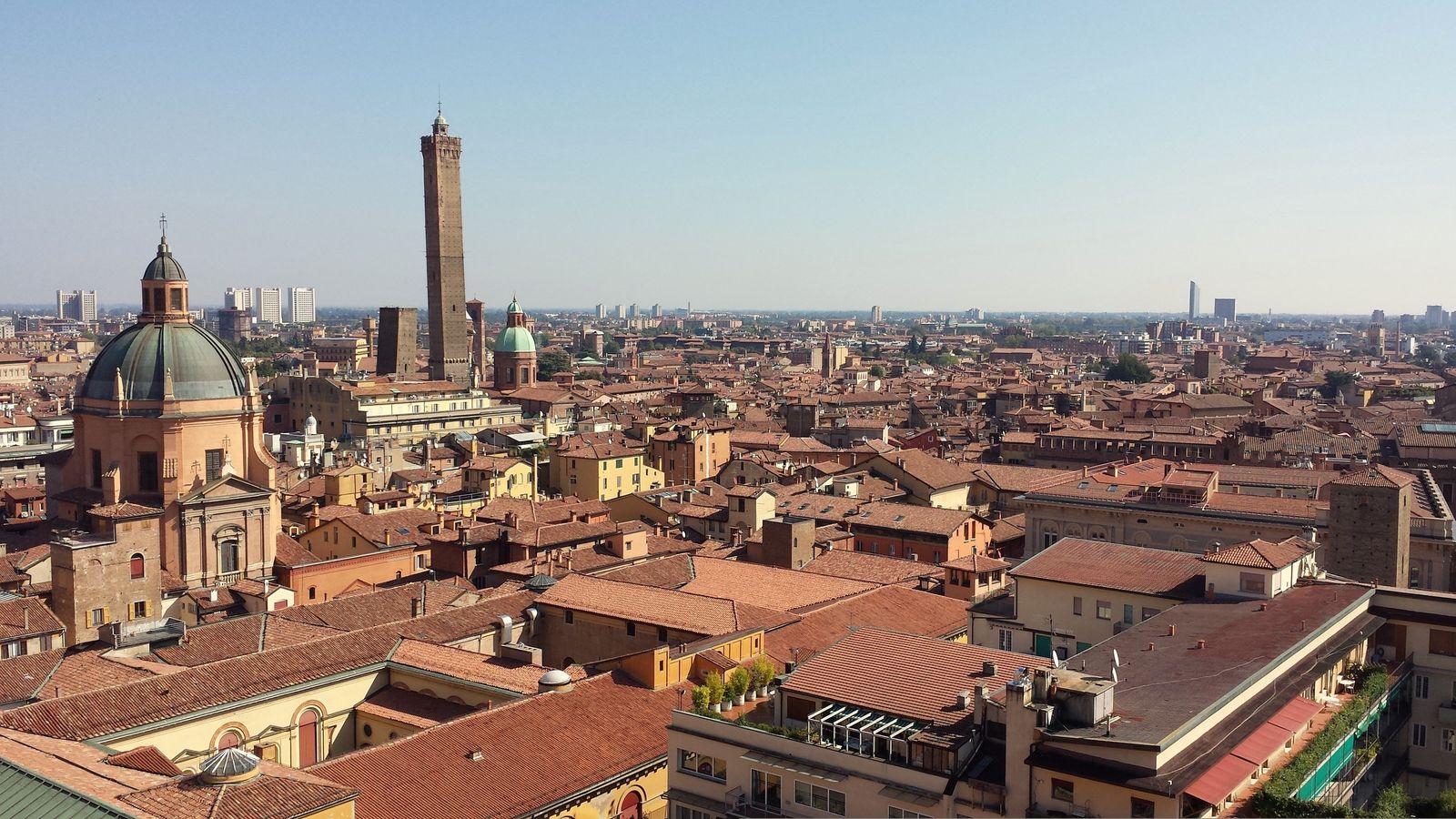
The Two Towers are the usual symbol of Bologna. They stand in the centre, where the ancient Via Emilia entered the city, and were built at the same time in the early 12th century. The Asinelli Tower is 97 metres tall, with 498 steps inside. The Garisenda is 47 metres tall and leans sharply because the ground and foundations have sunk; it was lowered in the 14th century for fear that it would collapse, and Dante mentions it in the Inferno. Access to the towers depends on conservation work – check the official page before you plan a climb.
Sources: [2]
The porticoes
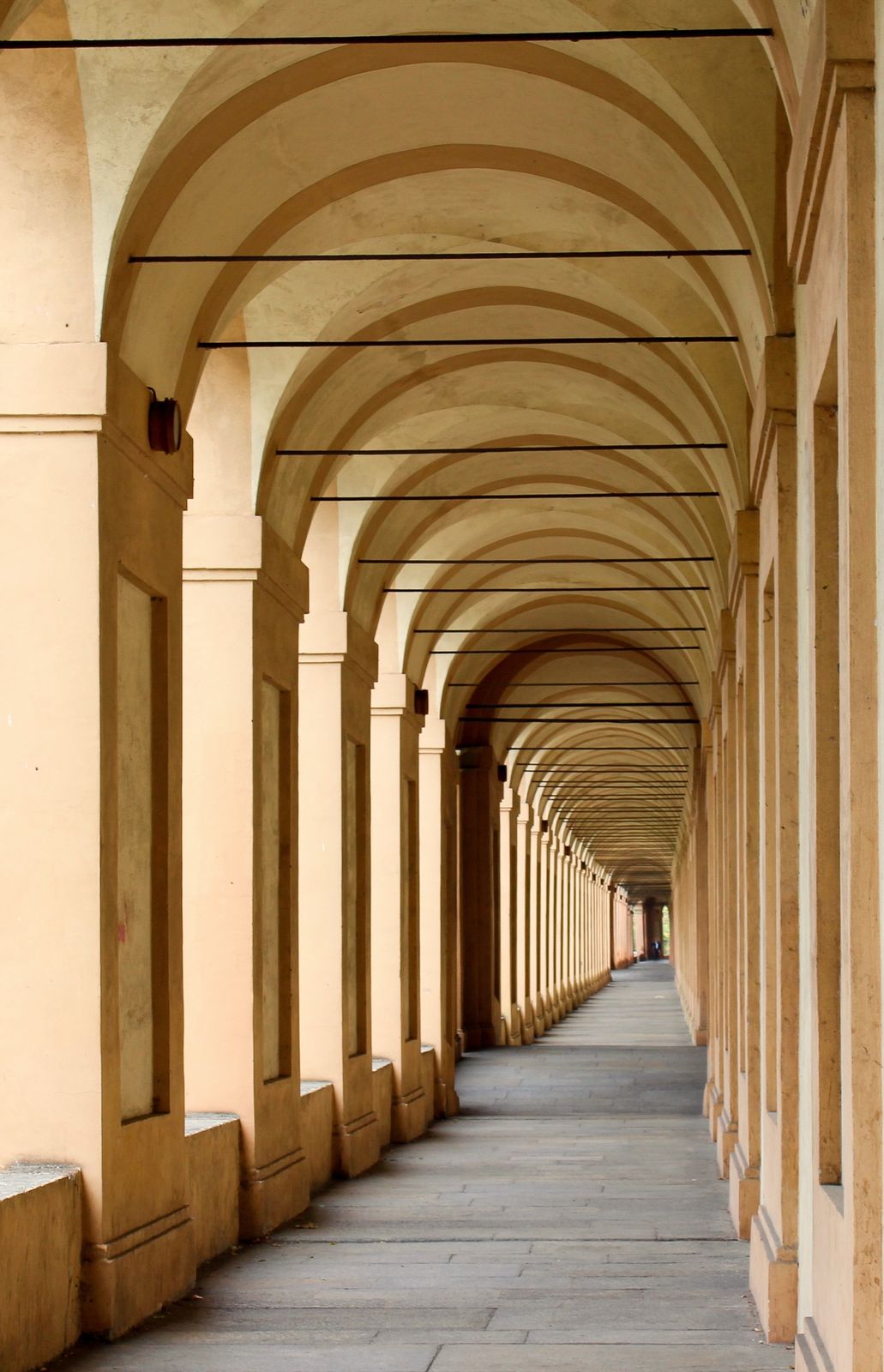
Bologna's covered walkways form a network about 62 kilometres long, built from the 12th century to the present day. The Porticoes of Bologna, a selection of twelve component parts, were inscribed on the UNESCO World Heritage List on 28 July 2021.
Emilia-Romagna
Bologna is the capital of Emilia-Romagna, which had 4,482,977 residents at the start of 2025; the Metropolitan City of Bologna had 1,025,534. The region has invested in data and computing infrastructure, the subject of the next section.
Sources: [5]
Supercomputing in Bologna: the DAMA technopole
In a former tobacco factory designed by Pier Luigi Nervi, the Emilia-Romagna region has built a technopole for science and technology. In March 2025 it was renamed DAMA – Tecnopolo Data Manifattura Emilia-Romagna.
It hosts the data centre of the European Centre for Medium-Range Weather Forecasts (ECMWF), formally opened in September 2021, and Leonardo, a EuroHPC pre-exascale supercomputer run by CINECA and inaugurated on 24 November 2022. INFN's computing centre CNAF opened its new data centre there on 10 May 2024. More in Institutes & Facilities.
On the Atlas
Bologna lies on the Concept Cities route of the TheScience.fm Atlas. On this route a city name often stands for an idea as well as a place: Bologna for a process, Frascati for a family of measurement manuals, Sèvres for the International System of Units.
-
Large research machines for particles, photons and plasma.
Stops: Grenoble.science → Geneva.science → Lausanne.science → Villigen.science → Frascati.science
-
Space agencies, mission centres and the people who build spacecraft.
Stops: Pasadena.science → Noordwijk.science → Bonn.science → Frascati.science
-
Concept Cities via Bologna
Cities tied to ideas about how science is judged, funded and measured. Frascati gave its name to the rules for counting R&D.
Stops: Sevres.science → Lyon.science → Bonn.science → Bologna.science → Frascati.science
-
How Switzerland organises research, from CERN's host city to its federal institutes.
Stops: Geneva.science → Lausanne.science → Villigen.science → Zuerich.science
All hubs
| Hub | Anchor institutions | Routes |
|---|---|---|
| Bologna.science | Bologna Process · ECMWF data centre | Concept Cities |
| Bonn.science | DFG · DAAD · Humboldt Foundation · German Space Agency at DLR | Space, Concept Cities |
| Frascati.science | INFN-LNF · ESA ESRIN · ENEA | Big Machines, Space, Concept Cities |
| Geneva.science | CERN | Big Machines, Swiss Model |
| Grenoble.science | ESRF · ILL | Big Machines |
| Lausanne.science | EPFL Swiss Plasma Center | Big Machines, Swiss Model |
| Lyon.science | IARC, the WHO cancer research agency | Concept Cities |
| Noordwijk.science | ESA ESTEC | Space |
| Pasadena.science | Caltech · NASA JPL | Space |
| Sevres.science | BIPM · SI and metrology | Concept Cities |
| Villigen.science | Paul Scherrer Institute | Big Machines, Swiss Model |
| Zuerich.science | ETH Zurich | Swiss Model |
| science.Taipei | Academia Sinica | partner station |
On the map
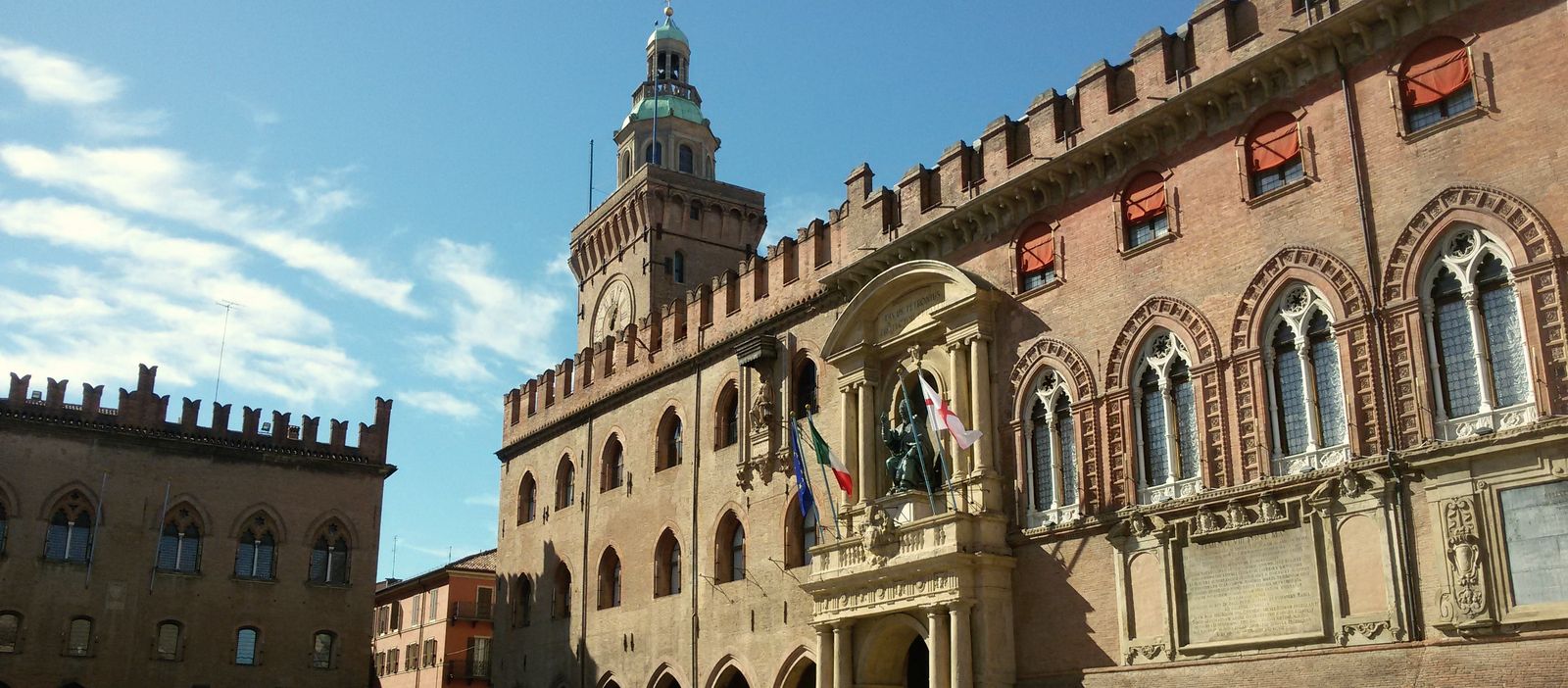
- Piazza Maggiore – the historic centre
- Via Zamboni – the university quarter
- DAMA Technopole
Sources
- University of Bologna – Our history
- Bologna Welcome – The Two Towers: Garisenda and degli Asinelli
- UNESCO World Heritage Centre – The Porticoes of Bologna
- Comune di Bologna – Porticoes: nomination timeline
- Regione Emilia-Romagna, Ufficio di Statistica (2025), Popolazione residente in Emilia-Romagna. Dati al primo gennaio 2025
- Regione Emilia-Romagna – Data Valley: the Technopole becomes DAMA (2025)
- ECMWF – The new data centre in Bologna
- EuroHPC JU – LEONARDO is inaugurated (24 November 2022)
- INFN – The new CNAF data center at the Bologna Technopole
Sources checked on 26 October 2026. Official documents are linked, not republished.