Independent educational resource · not affiliated with the EHEA or the BFUG Part of the TheScience.fm Platform
Bologna.science
European Higher Education Area

The Bologna
Process,
explained.

An independent, sourced guide to the tools that let a degree earned in one European country count in another.
✓ Primary sources on every page✓ English & Polish✓ Sources checked 26 October 2026
Illustration: a vaulted portico in perspective, its arches receding towards the light
Illustration: Bologna.science (own work)
Explore the toolkit

The Toolkit

Six tools behind the Bologna Process – each with its Polish counterpart and a link to the official text.

Tool I ECTS credits A common measure of study workload, so courses can be compared and transferred. PL · punkty ECTS Tool II Three cycles Bachelor, master and doctorate as a shared structure of degrees. PL · studia I, II i III stopnia Tool III Qualifications frameworks QF-EHEA and national frameworks that describe degrees by learning outcomes. PL · PRK Tool IV Diploma Supplement A standard annex that explains what a degree contains. PL · suplement do dyplomu Tool V Quality assurance The ESG standards, independent agencies and the EQAR register. PL · PKA Tool VI Recognition The Lisbon Recognition Convention and recognition of qualifications abroad. PL · NAWA

Guides

All tools →
Tool I · ECTS credits What is an ECTS credit – and what is it not? ECTS credits describe the learning a course asks for, not how well a student did. 5 min read · Source: ECTS Users' Guide 2015 Tool II · Three cycles Bachelor, master, doctorate: the shared ladder How the three-cycle degree structure of the European Higher Education Area came about, what each cycle typically involves, where the short cycle fits and what the doctorate is for. 4 min read · Source: QF-EHEA (2018) Tool III · Qualifications frameworks Qualifications frameworks without the jargon What the Framework of Qualifications for the EHEA (QF-EHEA) is, what the Dublin descriptors describe, how national frameworks relate to it and how it differs from the EU's EQF. 4 min read · Source: QF-EHEA (2018) Tool IV · Diploma Supplement Reading a Diploma Supplement, section by section The Diploma Supplement explains a degree to people who have never seen the university that awarded it. 3 min read · Source: Diploma Supplement template (2018) Tool V · Quality assurance Who checks the quality of a degree? How quality assurance works in the European Higher Education Area: the ESG standards and what they ask of universities and agencies, and the EQAR register. 3 min read · Source: ESG 2015 Tool VI · Recognition Will my degree be recognised abroad? What the Lisbon Recognition Convention promises, who has to prove what, and where to ask about recognition of a qualification. 3 min read · Source: Lisbon Recognition Convention

Articles

All articles →
29 October 2026 · Article · History What did the Bologna Declaration actually say? The Bologna Declaration of 19 June 1999 set six aims for European higher education. 3 min read · Source: The Bologna Declaration (1999) 26 October 2026 · Article · ECTS How many hours of work is one ECTS credit? One ECTS credit stands for 25 to 30 hours of student work. 3 min read · Source: ECTS Users' Guide 2015 26 October 2026 · Article · Poland Bachelor, engineer, master, doctor: which PRK and EQF level? Which level of the Polish Qualifications Framework (PRK) and the European Qualifications Framework (EQF) each Polish degree sits at, with the legal basis. 2 min read · Source: Act on the Integrated Qualifications System, Art. 8
Podcast TheScience.fm
nauka.news

A popular-science podcast and newsletter: the most interesting discoveries, ideas and scientific breakthroughs, without sensationalism or clickbait. Audio in Polish, with English subtitles and automatic English dubbing.

Episodes on YouTube

Bologna, the place

The other half of this site: Bologna as a city of science – its university, institutes and events, and how to visit.

Hub City & Region The city and the Emilia-Romagna region: getting your bearings. Hub Institutes & Facilities The University of Bologna, national research institutes and the DAMA technopole. Hub Conferences & Events European Researchers' Night, museum guided tours and academic events. Hub Science Travel Getting there, and what to see between the lectures and the labs.

Milestones

1999The Bologna Declaration sets out the shared goals
2010The European Higher Education Area is launched
TodayMinisterial communiqués steer each next stage
See the full timeline →

Why Bologna?

The Process is named after the city where the declaration was signed – home to one of Europe's oldest universities and to the Magna Charta Universitatum.

Visit the city page →
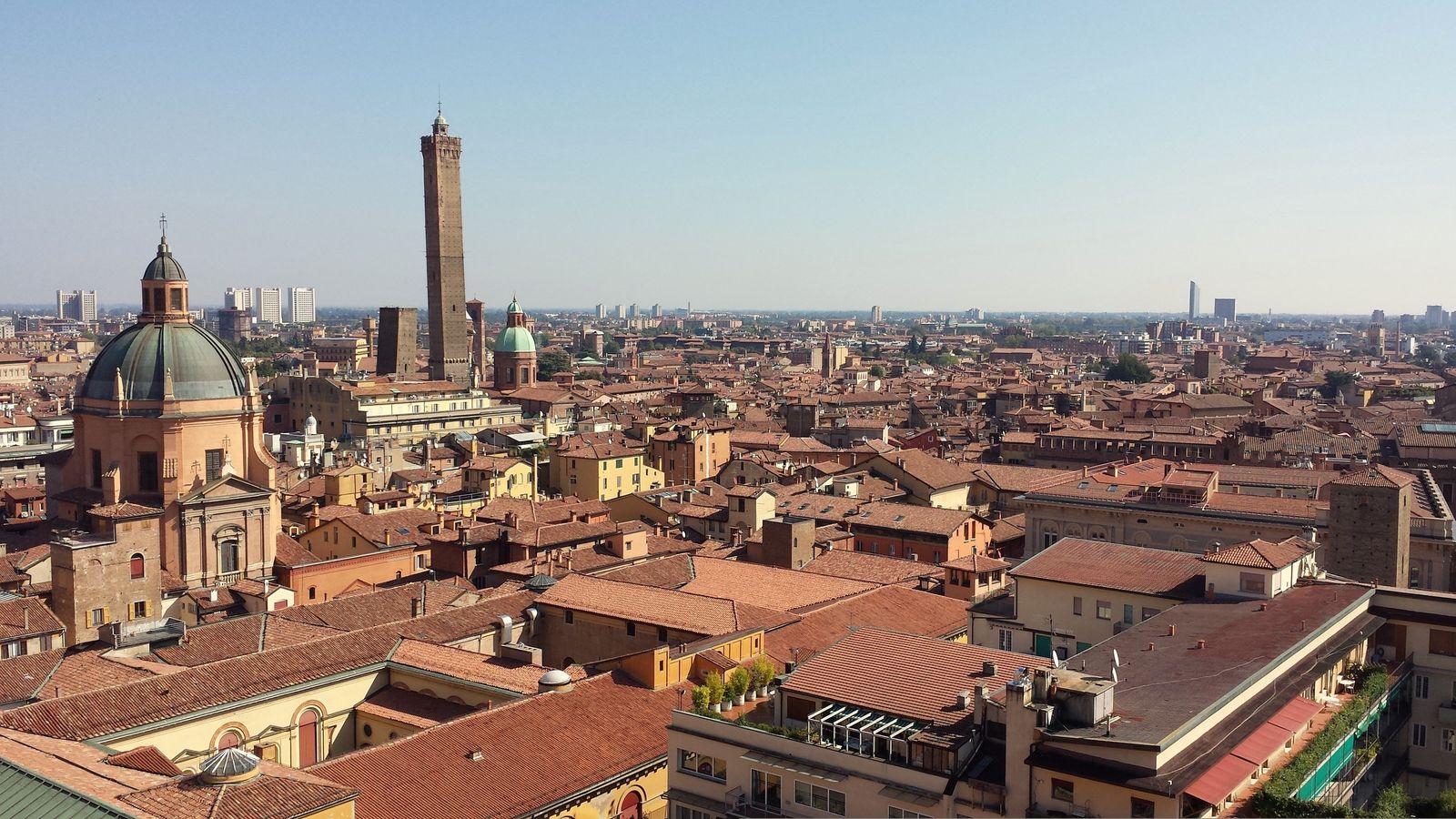
Bologna’s terracotta rooftops seen from above, with the Asinelli and Garisenda towers and church domes.
Lost in acronyms? EHEA, BFUG, ESG, EQAR, QF-EHEA – short definitions with official sources. Open the glossary →